
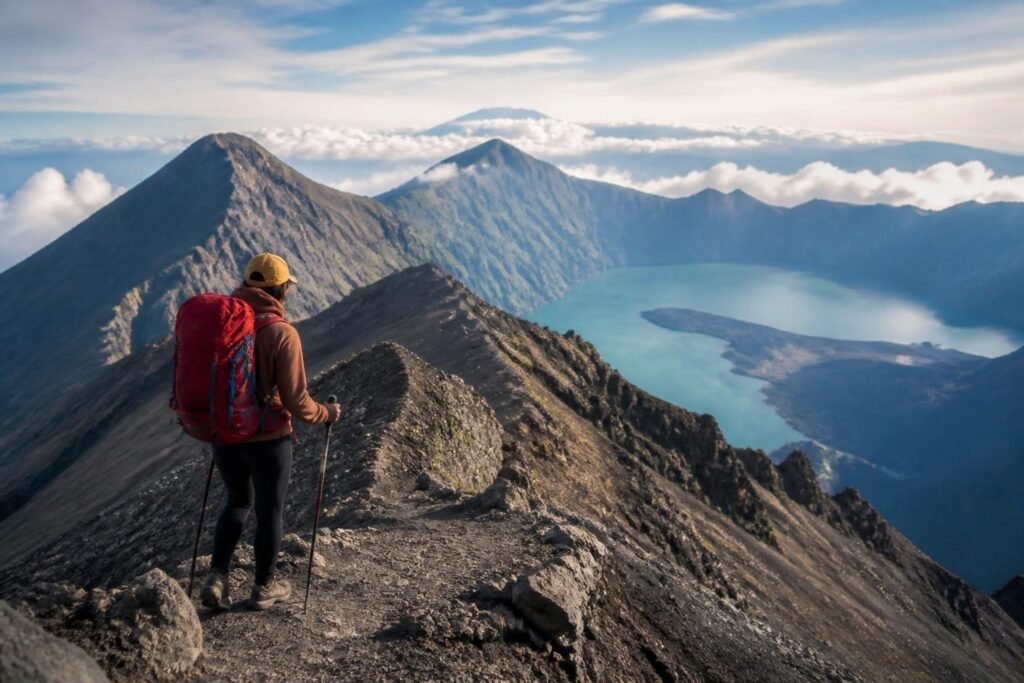
Mount Rinjani stands as Indonesia's second-highest volcano, rising 3,726 meters above Lombok Island. The mt rinjani trek attracts thousands of adventurers annually, offering spectacular crater lake views, natural hot springs, and challenging terrain that rewards trekkers with unforgettable experiences. Whether you're a seasoned mountaineer or an enthusiastic beginner, understanding the complexities of this trek ensures a safe and memorable journey through one of Southeast Asia's most dramatic landscapes.
Understanding Mount Rinjani's Trekking Landscape
Mount Rinjani's volcanic terrain presents diverse ecosystems and geological features that make each trekking route unique. The mountain's active status and protected national park designation require careful planning and adherence to environmental regulations.
Geographical Features and Trail Systems
The volcano encompasses several distinct zones, from tropical rainforest at lower elevations to alpine terrain near the summit. Segara Anak, the stunning crescent-shaped crater lake at 2,000 meters elevation, serves as a focal point for most trekking itineraries. Mount Rinjani’s geological features include hot springs along the lake's shore, where trekkers can relax after demanding ascents.
Multiple official routes access different parts of the mountain. Senaru remains the traditional starting point on the northern slope, while Sembalun on the eastern side offers a more gradual initial ascent. The newer Torean trail has gained popularity since 2021, providing dramatic scenery reminiscent of prehistoric landscapes.
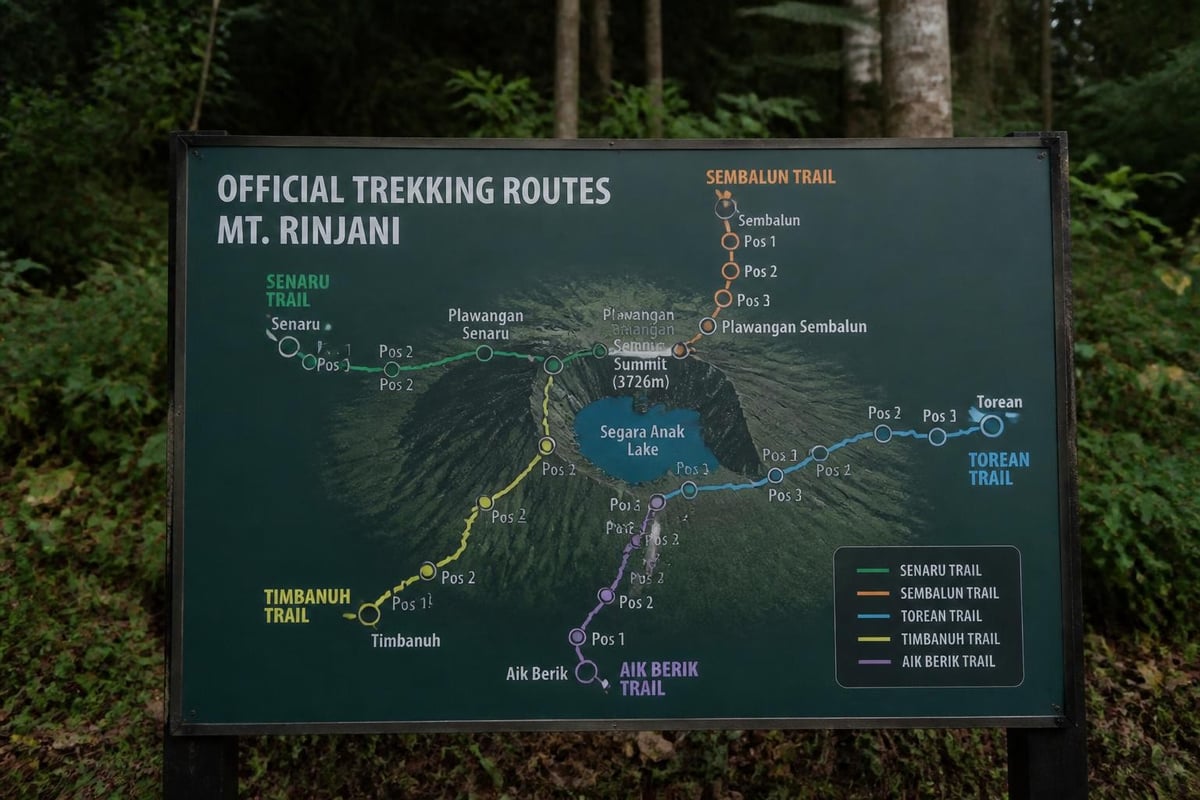
Key trekking zones include:
- Lower slopes (600-1,500m): Dense tropical forest with moderate temperatures
- Mid-elevation (1,500-2,600m): Savanna grasslands and crater rim camps
- High altitude (2,600-3,726m): Rocky volcanic terrain and summit approaches
- Crater area: Lake Segara Anak, hot springs, and secondary volcanic activity
The five official trekking routes each offer distinct advantages depending on your fitness level, time constraints, and preferred scenery. Route selection significantly impacts your overall mt rinjani trek experience.
Essential Permits and Regulations for 2026
Trekking regulations have evolved considerably to protect the mountain's fragile ecosystem and ensure visitor safety. All trekkers must comply with current permit requirements and environmental guidelines.
Mandatory Licensing and Guide Requirements
As of 2026, independent trekking without a licensed guide is prohibited on Mount Rinjani. This regulation ensures trekker safety and environmental protection throughout the national park. Current trekking regulations mandate that all visitors must book through registered trekking companies that employ certified guides.
Permits must be obtained through authorized operators who coordinate with the Rinjani Trek Management Board (RTMB). The permit system controls daily visitor numbers, preventing overcrowding at campsites and minimizing environmental impact.
| Permit Type | Duration | Included Services | Price Range |
|---|---|---|---|
| Standard Trek Permit | Per itinerary | Entry, conservation fee | Included in package |
| Porter Service | Per day | Equipment transport | Package dependent |
| Emergency Evacuation Insurance | Full trek | Rescue coordination | Highly recommended |
Environmental regulations require trekkers to carry out all waste, including organic materials. Camping is restricted to designated sites, and campfires are prohibited except in specific areas with proper supervision.
Physical Preparation and Fitness Requirements
A successful mt rinjani trek demands adequate physical conditioning and mental preparation. The combination of altitude, steep ascents, and variable weather conditions challenges even experienced hikers.
Training Recommendations and Fitness Benchmarks
Begin cardiovascular training at least six weeks before your scheduled trek. Focus on building endurance through activities that simulate hiking conditions, including stair climbing, incline walking, and loaded backpack training.
Recommended training schedule:
- Weeks 1-2: 30-minute cardio sessions, five days per week
- Weeks 3-4: 45-minute sessions with added elevation or resistance
- Weeks 5-6: 60-90 minute sessions including weighted backpack walks
- Week 7: Reduce intensity, maintain light activity for recovery
Altitude acclimatization becomes crucial above 2,500 meters. While Mount Rinjani's elevation doesn't typically cause severe altitude sickness, proper pacing and hydration help prevent headaches and fatigue. Summit attempts begin in the early morning hours, requiring mental preparation for trekking in darkness and cold temperatures.
Consider your current fitness level when selecting package duration. The 2-day-1-night crater rim package suits moderately fit beginners, while summit attempts demand higher fitness levels and determination.
Choosing the Right Trek Duration and Route
Package selection directly impacts your experience, determining which landmarks you'll visit and how much time you'll spend at each elevation. Understanding the differences between itinerary options helps match your trek to your goals and capabilities.
Comparing Popular Trekking Packages
Two-day packages focus on either the crater rim or combine crater rim views with a summit attempt. These condensed itineraries suit travelers with limited time but require faster elevation gain and more strenuous daily hiking.
For those seeking a more comprehensive experience, the 3-day-2-night Torean route has become the bestseller since the trail's opening. This package includes crater rim vistas, Segara Anak Lake, hot springs, and the summit attempt, providing time for acclimatization and landscape appreciation. The Torean trail's dramatic scenery and well-maintained path make it particularly appealing for both photography enthusiasts and nature lovers.
Extended four-day packages add an extra night at the lake, reducing daily hiking intensity and allowing more time to explore hot springs and surrounding areas. This relaxed pace benefits trekkers who value comfort and thorough exploration over speed.
Route comparison factors:
- Summit inclusion: Some packages reach 3,726m, others stop at crater rim (2,641m)
- Lake access: Time spent at Segara Anak varies significantly
- Trail difficulty: Newer routes offer different terrain challenges
- Camping comfort: Extra nights allow better rest and recovery
The choice between Senaru and Sembalun starting points affects your first day's difficulty. Sembalun begins at higher elevation with gentler initial slopes, while Senaru starts lower with steeper forest trails.
Essential Gear and Equipment Planning
Proper equipment ensures comfort, safety, and enjoyment throughout your mt rinjani trek. While reputable trekking companies provide camping gear, personal items require careful selection and packing.
Personal Equipment Checklist
Layered clothing systems prove essential for managing temperature variations from tropical base elevations to near-freezing summit conditions. Daytime temperatures at lower elevations reach 25-30°C, while summit temperatures drop to 0-5°C during pre-dawn ascents.
| Equipment Category | Essential Items | Optional Upgrades |
|---|---|---|
| Clothing | Moisture-wicking base layers, fleece mid-layer, waterproof jacket, trekking pants | Down jacket, spare clothing set |
| Footwear | Broken-in hiking boots, wool socks (3 pairs) | Gaiters, camp shoes |
| Accessories | Headlamp with spare batteries, sun hat, gloves | Trekking poles, buff/neck gaiter |
| Personal Items | Sunscreen (SPF 50+), toiletries, first aid kit | Portable charger, camera equipment |
Quality hiking boots make the single most important equipment investment. Ensure boots are fully broken in before your trek to prevent blisters during long hiking days. Waterproof boots protect against morning dew and potential rain, particularly during shoulder seasons.
Experienced trekking companies supply tents, sleeping bags rated for appropriate temperatures, cooking equipment, and meals. Verify what your chosen operator provides to avoid redundant packing. Most companies also offer porter services to carry camping equipment and supplies, allowing trekkers to hike with lighter day packs containing only personal essentials.
Weather Patterns and Optimal Trekking Seasons
Mount Rinjani's tropical monsoon climate creates distinct trekking seasons that significantly impact trail conditions, visibility, and overall experience. Understanding weather patterns helps optimize your trek timing.
Seasonal Considerations and Climate Data
The official trekking season runs from April through December, with the mountain closed during January through March due to heavy monsoon rains. Peak season occurs during July and August, coinciding with European summer holidays and offering the most stable weather conditions.
April through June represents the shoulder season following the monsoon. Trails may retain some moisture, but crowds remain lighter and temperatures stay comfortable. This period often provides excellent visibility and vibrant green landscapes from recent rainfall.
September through December offers another optimal window. Post-monsoon dryness creates stable trail conditions, though November and December bring increasing moisture as the next rainy season approaches. These months provide a balance between good weather and moderate visitor numbers.
Monthly trekking conditions:
- April-May: Fresh post-monsoon vegetation, moderate temperatures, lighter crowds
- June-August: Peak season, driest conditions, most crowded campsites
- September-October: Excellent visibility, stable weather, comfortable temperatures
- November-December: Increasing moisture, variable conditions, fewer trekkers
Temperature variations between seasons remain relatively modest at base elevations but become more pronounced at higher altitudes. Summit temperatures always require warm layers regardless of season. Additional information about optimal trekking periods helps refine your planning based on specific preferences.
Daily Itinerary Expectations and Hiking Pace
Understanding typical daily schedules helps mentally prepare for the physical demands and time management required during your mt rinjani trek. Each day presents unique challenges and rewards.
Standard Trek Timeline and Camp Progression
Most itineraries begin with afternoon departures from trailheads, allowing morning hotel checkout and transportation to starting points. First-day hiking typically covers 6-8 kilometers over 4-6 hours, depending on route and destination camp.
Day two on summit packages involves the most demanding schedule. Trekkers wake between 2:00-3:00 AM for summit attempts, hiking 3-4 hours in darkness to reach the peak for sunrise. The descent to crater rim camp takes 2-3 hours, followed by lunch and continued descent to lake level or return toward trailheads.
Three-day packages distribute hiking more evenly, with moderate daily distances allowing time to appreciate surroundings and rest adequately. The extra day transforms the trek from an endurance challenge into a more enjoyable mountain experience.
Typical daily schedule (3-day package):
- Day 1: Afternoon start, 5-6 hour hike to crater rim (2,641m)
- Day 2: Morning descent to lake (2,000m), afternoon at hot springs, 4-5 hours total
- Day 3: Pre-dawn summit attempt (3,726m), return to lake, final descent, 8-10 hours total
Rest breaks occur approximately every 45-60 minutes during ascents, with longer stops at designated viewpoints and meal times. Guides set pacing based on group fitness levels, prioritizing safety over speed. Porter teams typically move faster, arriving at camps early to establish facilities before trekkers arrive.
Safety Protocols and Emergency Preparedness
Mountain trekking inherently involves risks that proper planning and adherence to safety protocols significantly mitigate. Understanding potential hazards and emergency procedures provides peace of mind.
Risk Management and Medical Considerations
Altitude-related issues represent the primary health concern on Mount Rinjani. While the elevation rarely causes severe altitude sickness, individual responses vary. Symptoms including headaches, nausea, and fatigue should be reported to guides immediately. Proper hydration (3-4 liters daily) and gradual ascent help prevent altitude problems.
Volcanic activity monitoring continues year-round, though Mount Rinjani remains safe for trekking under normal conditions. Authorities close trails immediately if seismic activity increases, prioritizing visitor safety over commercial considerations.
Communication capabilities vary by location on the mountain. Mobile phone coverage exists at some camps but becomes unreliable at higher elevations. Reputable trekking companies maintain emergency communication equipment and established evacuation procedures coordinating with local rescue teams.
Essential safety measures:
- Pre-trek health assessment and medical disclosure to guides
- Travel insurance including emergency evacuation coverage
- Adherence to guide instructions regarding pace and route
- Weather monitoring and flexible itinerary adjustments
- Proper food and water hygiene to prevent gastrointestinal issues
First aid training for guides remains mandatory under current regulations. Professional operators maintain well-stocked medical kits and oxygen supplies for altitude emergencies. The comprehensive safety guidelines published by park authorities outline all current requirements and recommendations.
Environmental Responsibility and Conservation
The stunning natural beauty that makes the mt rinjani trek memorable requires active protection from all visitors. Environmental consciousness should guide every decision during your trek.
Leave No Trace Principles and Park Conservation
Mount Rinjani National Park faces pressure from increasing visitor numbers, making responsible trekking practices essential for preservation. All waste must be carried out, including food scraps that might attract wildlife or alter natural ecosystems. Biodegradable items still require removal to maintain pristine conditions.
Water sources demand particular protection. Washing activities must occur at least 50 meters from streams and lakes, using biodegradable soap sparingly or avoiding soap entirely. Human waste disposal follows strict protocols, with designated toilet facilities at established camps.
Trail etiquette includes staying on marked paths to prevent erosion and vegetation damage. Shortcuts between switchbacks create erosion channels that worsen with each passing trekker. The cumulative impact of minor violations significantly damages the mountain over time.
Conservation commitments for responsible trekking:
- Pack out all waste including cigarette butts and food packaging
- Use provided toilet facilities exclusively
- Minimize noise pollution to protect wildlife
- Avoid disturbing plants, animals, or geological formations
- Support operators demonstrating environmental commitment
Professional trekking companies participate in regular trail maintenance and waste management programs. When selecting an operator, prioritize those demonstrating genuine environmental stewardship through concrete actions beyond basic regulatory compliance. Supporting responsible operators encourages industry-wide conservation improvements.
Cultural Considerations and Local Community Impact
The mt rinjani trek occurs within territories traditionally inhabited by Sasak people, whose cultural heritage and economic welfare connect directly to mountain tourism. Respectful engagement benefits both visitors and local communities.
Community-Based Tourism and Cultural Sensitivity
Trekking employment provides significant income for villages surrounding Mount Rinjani. Guides, porters, and support staff come predominantly from local communities, making tourism a vital economic driver. Choosing locally-owned operators ensures economic benefits remain within these communities rather than flowing to external companies.
Cultural respect extends beyond economic considerations. Conservative dress codes apply in villages, though trekking attire is acceptable on trails. Photography should always respect personal privacy, with permission requested before photographing individuals or religious sites.
Porter welfare represents an important ethical consideration. Responsible operators limit porter loads to 20-25 kilograms, provide proper equipment, and ensure fair wages. Budget operators sometimes compromise porter welfare to reduce costs, creating ethical concerns for socially conscious travelers.
The integration of traditional knowledge with modern safety practices enriches the trekking experience. Local guides bring generations of mountain familiarity, understanding weather patterns, terrain characteristics, and optimal routes that complement formal training and certification.
Post-Trek Recovery and Extended Lombok Exploration
Completing your mt rinjani trek marks an achievement worth celebrating, though your body requires recovery time before additional activities. Planning post-trek relaxation optimizes your overall Lombok experience.
Recovery Strategies and Regional Tourism
Muscle soreness peaks 24-48 hours after completing your trek. Light activity, proper hydration, and adequate rest facilitate recovery. Many trekkers schedule beach time or spa treatments immediately following their mountain adventure, allowing muscles to recuperate while remaining active.
Lombok offers diverse attractions complementing the trekking experience. The traditional village tours and coastal destinations provide cultural immersion and scenic beauty without demanding physical exertion. Northern waterfalls including Sendang Gile and Tiu Kelep offer refreshing swimming opportunities in spectacular natural settings.
Beach relaxation at Lombok's pristine coastlines provides perfect post-trek recovery. Southern beaches like Selong Belanak offer gentle surf and soft sand, while Gili islands accessible via short boat rides present snorkeling and diving opportunities.
Post-trek activity recommendations:
- Days 1-2: Light walking, swimming, massage therapy
- Days 3-4: Cultural tours, waterfall visits, beach activities
- Days 5+: More active pursuits including water sports or cycling
Combining mountain trekking with coastal or cultural experiences creates a comprehensive Lombok adventure. Many visitors spend 7-10 days total, allowing adequate time for both strenuous trekking and relaxed exploration. Comprehensive Lombok tour packages efficiently combine multiple activities within single itineraries.
Booking Considerations and Operator Selection
Choosing the right trekking company significantly impacts safety, enjoyment, and overall value. Multiple factors beyond price should inform your decision.
Evaluating Trekking Companies and Service Quality
Operator credentials provide the foundation for assessment. Verify licensing with the Rinjani Trek Management Board and check guide certifications. Established companies maintain transparent operations with published safety records and customer testimonials.
Equipment quality varies substantially between operators. Inspect tent conditions, sleeping bag temperature ratings, and cooking equipment standards when possible. Companies using worn or inadequate equipment compromise comfort and potentially safety.
Group size affects both experience quality and environmental impact. Smaller groups allow more personalized attention from guides and create less crowding at campsites. Larger groups may offer cost savings but reduce flexibility and individual interaction.
| Selection Criteria | Premium Operators | Budget Operators |
|---|---|---|
| Guide-to-trekker ratio | 1:4 or better | 1:8 or higher |
| Equipment age/condition | Recent, well-maintained | Variable, potentially worn |
| Porter welfare standards | Weight limits, proper gear | May compromise for savings |
| Environmental practices | Active conservation participation | Basic regulatory compliance |
| Emergency preparedness | Comprehensive protocols, insurance | Minimum requirements |
Transparent pricing indicates reputable operations. Extremely low prices often reflect compromised safety standards, inadequate porter treatment, or hidden costs. Mid-range to premium pricing generally correlates with better overall experiences and responsible practices.
Communication responsiveness during booking processes suggests operational professionalism. Companies answering questions thoroughly, providing detailed itineraries, and addressing concerns demonstrate customer service commitment that continues throughout your trek. Experienced companies like Hiking Mount Rinjani prioritize clear communication and comprehensive pre-trek information.
The mt rinjani trek represents a challenging yet rewarding adventure that combines natural beauty, physical achievement, and cultural immersion. Proper preparation, responsible operator selection, and environmental consciousness ensure both personal satisfaction and mountain preservation for future generations. Hiking Mount Rinjani offers professional trekking services with experienced guides, quality equipment, and commitment to both client success and environmental stewardship, making your Mount Rinjani adventure safe, memorable, and responsibly managed. Start planning your 2026 trek today through Hiking Mount Rinjani to experience Indonesia's premier volcanic adventure.