
Is Acatenango Harder Than Rinjani – When hikers start building an international bucket list, two volcano treks often spark the same question: is Acatenango harder than Rinjani? Both mountains sit in dramatically different parts of the world. Acatenango in Guatemala and Mount Rinjani in Indonesia, but they share one thing: they push your body, mindset, and mountain skills to the limit.
I’ve followed countless stories from trekkers who’ve stood on both trails. Some who conquered Rinjani first and then flew to Central America for Acatenango, and others who did the opposite. Their experiences reveal something fascinating: these hikes feel different, but they test you in equally serious ways.
Before comparing them directly, let’s step into Acatenango first, through the eyes of real hikers.
How Hard Is Acatenango? A Hikers’ Stories
If you ask someone right after they descend Acatenango, they’ll usually laugh, shake their head, and say, “That was brutal… but worth every step.”
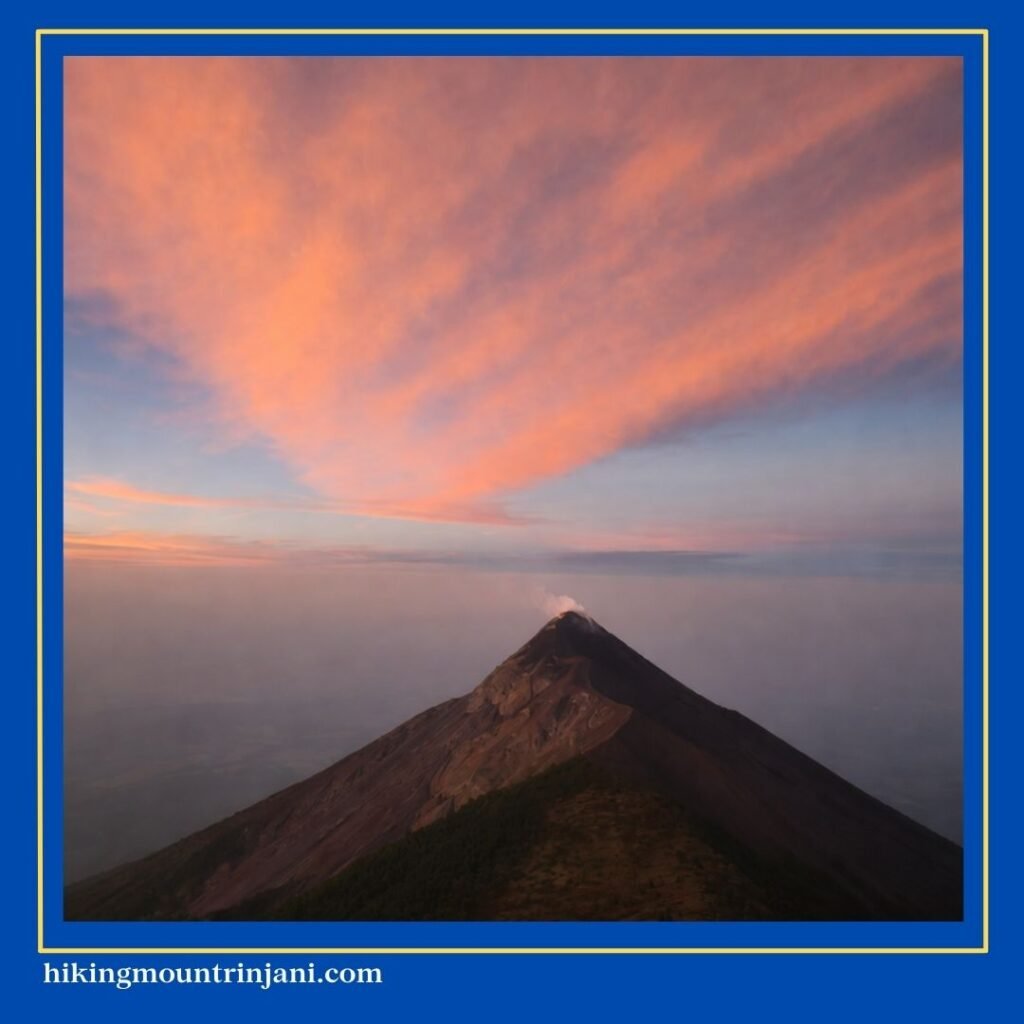
One hiker shared how they climbed to Acatenango base camp mainly to witness the dramatic eruptions of Volcán de Fuego. Along the way, they were treated to stunning views of Volcán de Agua, which stood quietly in the distance like a painted backdrop. The scenery was beautiful, but the trail itself? Relentless.
The first thing most hikers mention is the steepness. This is not a gentle incline. The path rises sharply, and the elevation gain hits quickly. Many describe the trail as “straight up” for long stretches, with very few flat sections to recover.
- Elevation gain: around 1,500–1,800 meters
- Distance uphill: about 6.5 km
- Summit elevation: 3,976 meters above sea level
That combination drains energy fast. One hiker said the climb felt “never-ending,” as if each ridge revealed another steep wall ahead. This is why many recommend Acatenango only for intermediate hikers or above. Beginners often underestimate how physically demanding a short-but-steep mountain can be.
The ascent to base camp alone can take several hours. One trekker recorded a total moving time (up and down, excluding long breaks) of around 7 hours 40 minutes. That’s a full-body workout on loose volcanic soil that shifts under your boots, making both ascent and descent tricky.
1. The Mental Game
Acatenango isn’t just physical, it’s psychological. When the slope doesn’t seem to end and your legs burn, your mind starts negotiating: “Maybe I’ll stop at base camp. Maybe I don’t need the summit.”
But then night falls.
From base camp, hikers witness something unforgettable: Fuego erupting every 20–30 minutes. Lava glows against the dark sky. Ash plumes rise, illuminated by fire from within the earth. It feels raw and primal. Many hikers say this moment alone erases the memory of suffering on the trail.
Later, often before dawn, trekkers push another 1–2 km to Acatenango’s summit. That final stretch is cold, steep, and exhausting, but the reward is extraordinary: sunrise over Agua, while Fuego continues to erupt beside you. Hikers describe it as a once-in-a-lifetime sight.
2. Weather and Cold
One detail many didn’t expect: the cold. Temperatures at the top can drop between 5°C and 0°C, sometimes lower with wind chill. Several hikers admitted they underestimated this and struggled at camp.
Layering is essential. Gloves, hats, thermal layers, and windproof jackets aren’t optional luxuries, they are survival gear for comfort and safety.
3. Trail Conditions and Support
Another interesting aspect: local vendors sometimes appear along the route selling water and drinks. This surprises many hikers. While you can buy supplies, it’s smart to carry enough cash and not rely entirely on trail purchases.
There are also many rest spots, and on the way down, locals often sell cold drinks and fruit, a welcome treat after the exhausting descent.
The Final Verdict on Acatenango
Most hikers sum it up like this:
- It’s not for the faint-hearted
- It’s exhausting but achievable with good fitness
- The climb is almost entirely uphill and feels endless
- Some sections are challenging both going up and down
- Do it only if you are in good physical condition
One hiker even climbed during a cyclone, which made the trail dramatically harder. That story highlights an important truth: Acatenango can shift from “hard” to “extreme” depending on weather.
.
Read also: 8 Best Places to Visit in Lombok When Mount Rinjani Is Closed!
Is Acatenango Harder Than Rinjani?
Now we come back to the core question: is Acatenango harder than Rinjani?
The honest answer: they are difficult in different ways, and which one feels harder depends on what challenges you struggle with most.
Let’s compare key factors.
1. Elevation and Altitude, Is Acatenango Harder Than Rinjani?
- Acatenango summit: 3,976 m
- Rinjani summit: 3,726 m
Acatenango is slightly higher. Both mountains can trigger altitude-related discomfort, but Acatenango’s steep, rapid ascent means you gain elevation fast. Your body has less time to adapt, so the altitude can feel more intense.
Advantage (harder): Acatenango
2. Steepness vs Duration
This is where the big difference lies.
Acatenango
- Shorter distance
- Extremely steep
- Feels like a continuous uphill battle
Rinjani
- Multi-day trek
- Longer overall distance
- Mix of steep climbs, long trails, and sandy volcanic sections
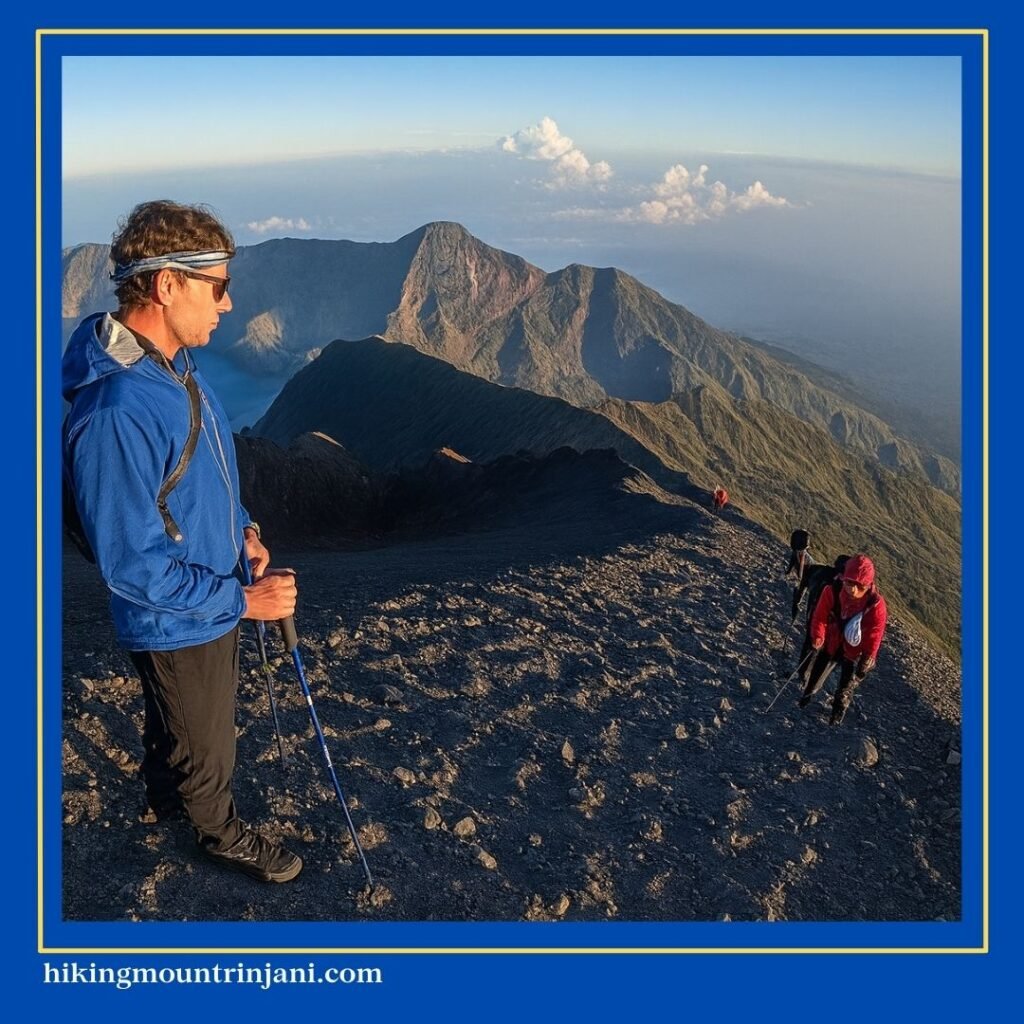
Rinjani’s summit push, especially the loose volcanic sand before dawn, is famously exhausting. Every step can slide back. However, the trek is usually spread over several days, giving your body some recovery time between major pushes.
Acatenango compresses suffering into a shorter timeframe. Rinjani spreads it out.
- If you struggle with steep, relentless climbs → Acatenango feels harder.
- If you struggle with endurance over several days → Rinjani feels harder.
3. Is Acatenango Harder Than Rinjani? The “Terrain”
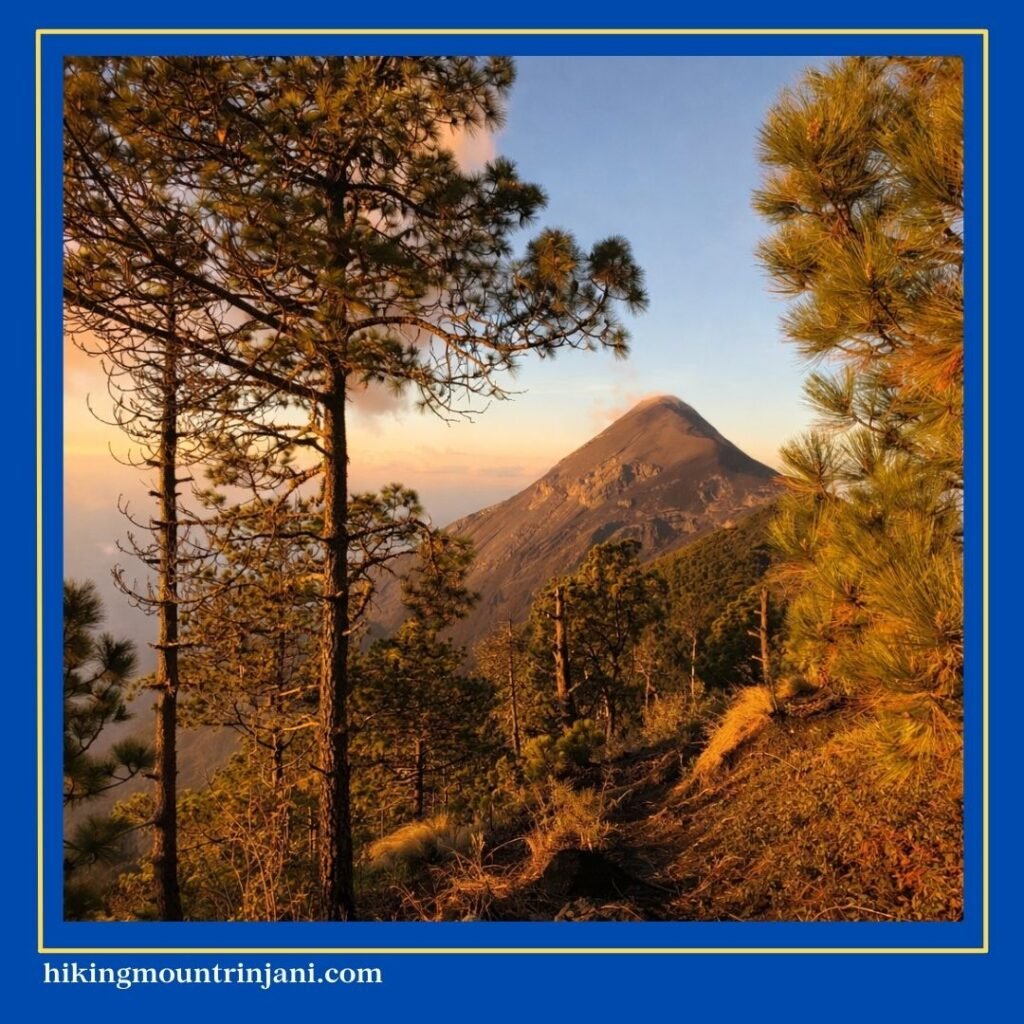
- Acatenango: forest trails turning into loose volcanic soil
- Rinjani: dirt paths, rocky ridges, and deep volcanic sand
Many hikers say Rinjani’s summit ridge feels more unstable and technically tiring because of sand and exposure. Acatenango is tough, but the terrain is more straightforward.
Advantage (technical challenge): Rinjani
4. Weather and Exposure
Both mountains can be cold at night, but Acatenango often surprises hikers with freezing summit temperatures. Rinjani can also be windy and cold at the crater rim, but daytime conditions can be hotter and more humid.
Acatenango’s exposed summit and overnight camp in cold conditions add another layer of discomfort.
5. Psychological Factor
Acatenango: short, steep, mentally draining, but with dramatic volcanic eruptions as constant motivation.
Rinjani: longer, more varied landscapes—crater lake, hot springs, summit—but mental fatigue builds over days.
So… Is Acatenango Harder Than Rinjani?
For many experienced trekkers:
- Acatenango feels harder in the short term (steepness, fast elevation gain, cold).
- Rinjani feels harder overall due to multi-day endurance, summit sand slog, and cumulative fatigue.
They are comparable in difficulty, just in different styles of suffering. If you’ve done Rinjani, you likely have the endurance for Acatenango, but you’ll need to prepare for steeper gradients. If you’ve done Acatenango, you can handle intense climbs, but Rinjani will test your stamina over multiple days.
.
Read also: Is a Mount Rinjani Day Trip Possible? Here Are the Best Options
Thinking About Hiking Mount Rinjani? Register Now!
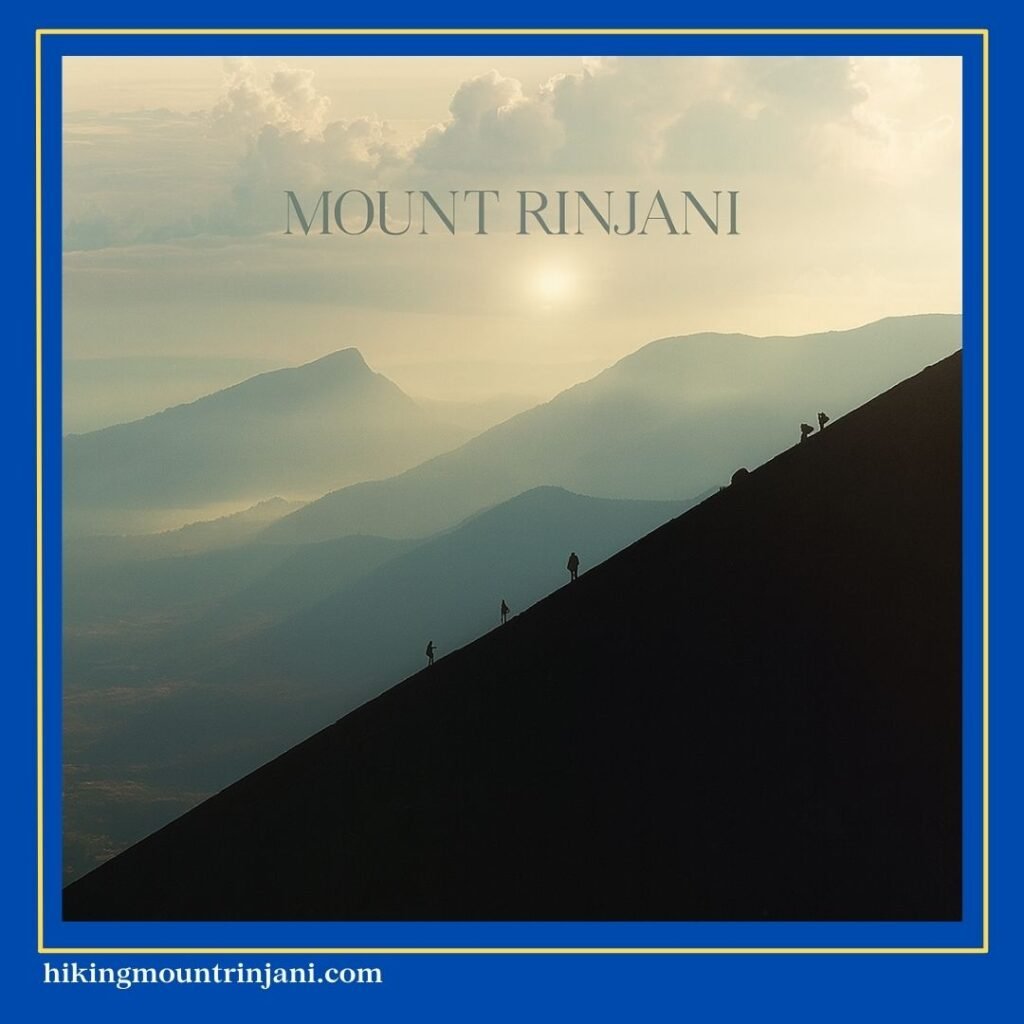
If comparing is Acatenango harder than Rinjani makes you curious to try Rinjani next, this iconic Indonesian volcano should be on your list. Known as one of the most beautiful mountains in Lombok, Rinjani offers crater lakes, dramatic ridgelines, and unforgettable summit views.
Currently, the mountain is temporarily closed for recovery, with reopening expected around early April. Once open, international hikers are required to trek with experienced guides and porters as a safety measure. Trekking companies will handle your official registration with your knowledge and agreement.
If you’re interested, visit hikingmountrinjani.com to explore available trekking packages, see the costs, and compare what each package includes. You can choose the one that fits your goals and ask about all facilities provided.
Airport and accommodation pickup are already included, making logistics much easier. If you prefer direct communication, there is also a WhatsApp contact button on the site so you can speak directly with a Rinjani trekking organizer.
Both Acatenango and Rinjani will challenge you, but they will also leave you with stories you’ll tell for the rest of your life.
.