
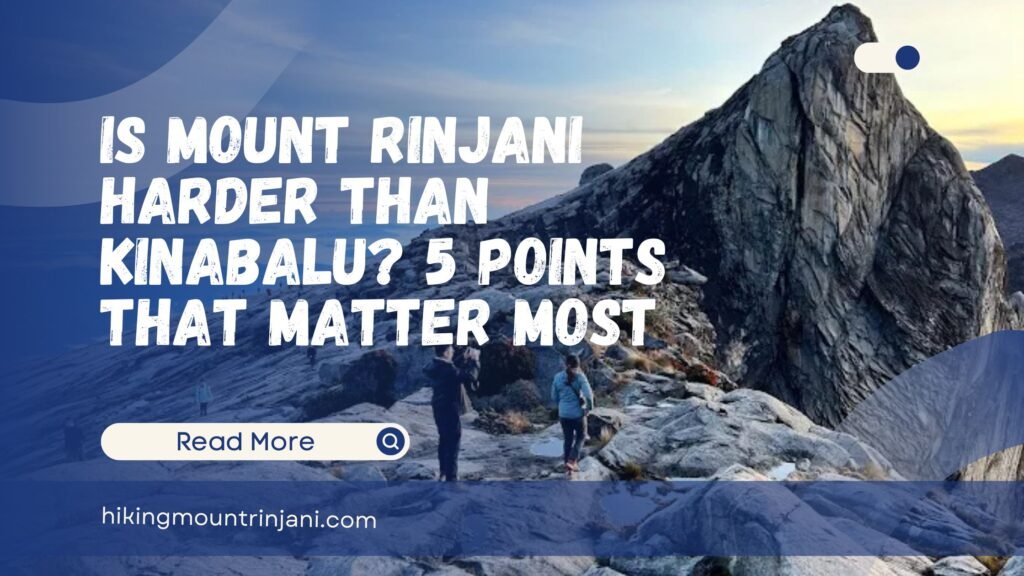
Is Mount Rinjani Harder Than Kinabalu – For many international hikers, Southeast Asia offers two of the region’s most iconic trekking experiences: Mount Rinjani in Indonesia and Mount Kinabalu in Malaysia. Both mountains promise stunning landscapes and unforgettable summit moments. Yet one question comes up repeatedly among travelers planning their adventure:
Is Mount Rinjani harder than Kinabalu, or is it the opposite?
While both peaks stand proud above 3,000 meters, their challenges feel very different. Kinabalu is known for its long stair-like ascent and well-developed infrastructure, while Rinjani is famous for its volcanic terrain, loose sand, wide-open caldera, and physically demanding summit push. Choosing between them becomes easier when you understand what factors truly shape the experience.
Is Mount Rinjani Harder Than Kinabalu? 5 Key Differences
Before diving into the five key differences, it’s important to clarify that difficulty isn’t just about altitude or distance. It’s also about terrain, trail design, climbing style, weather, recovery opportunities, and your personal comfort level. With that context, let’s explore each factor in detail.
1. Use of Ladders on the Mountain
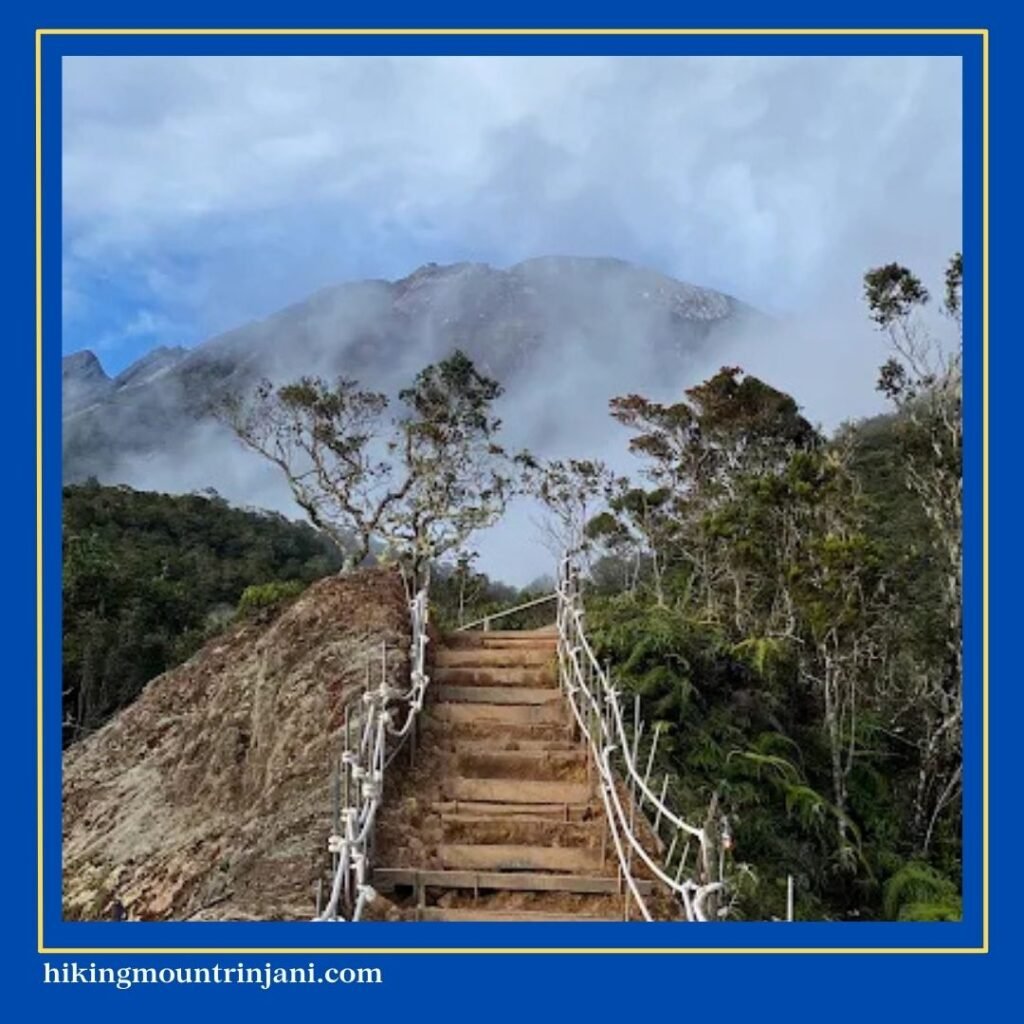
One of the most defining characteristics of Mount Kinabalu is the presence of thousands of stairs. Many hikers describe the route as:
“46,000 stairs — that’s what makes the challenge difficult.”
“Mostly stairs and rock stairs, plus the thin air.”
“Beautiful scenery and a well-maintained trail, but stairs again and again.”
“Do lots of stair training. Day 1 is a 6 km stair trail; Day 2 mixes stairs, ropes, and steep incline.”
Kinabalu’s stair-heavy path is intentional. The park authority designed the trail so even beginners can attempt the climb with proper pacing and guidance. From Timpohon Gate to Laban Rata, nearly the entire route alternates between cement stairs, wooden steps, and natural rocky steps. This structure makes the mountain predictable, organized, and relatively safe, especially during wet conditions.
On the second day, rope-assisted sections begin above Sayat-Sayat, but the incline remains manageable for hikers with moderate preparation. The summit plateau—Low’s Peak—feels open and iconic, but highly regulated.
How About Rinjani?
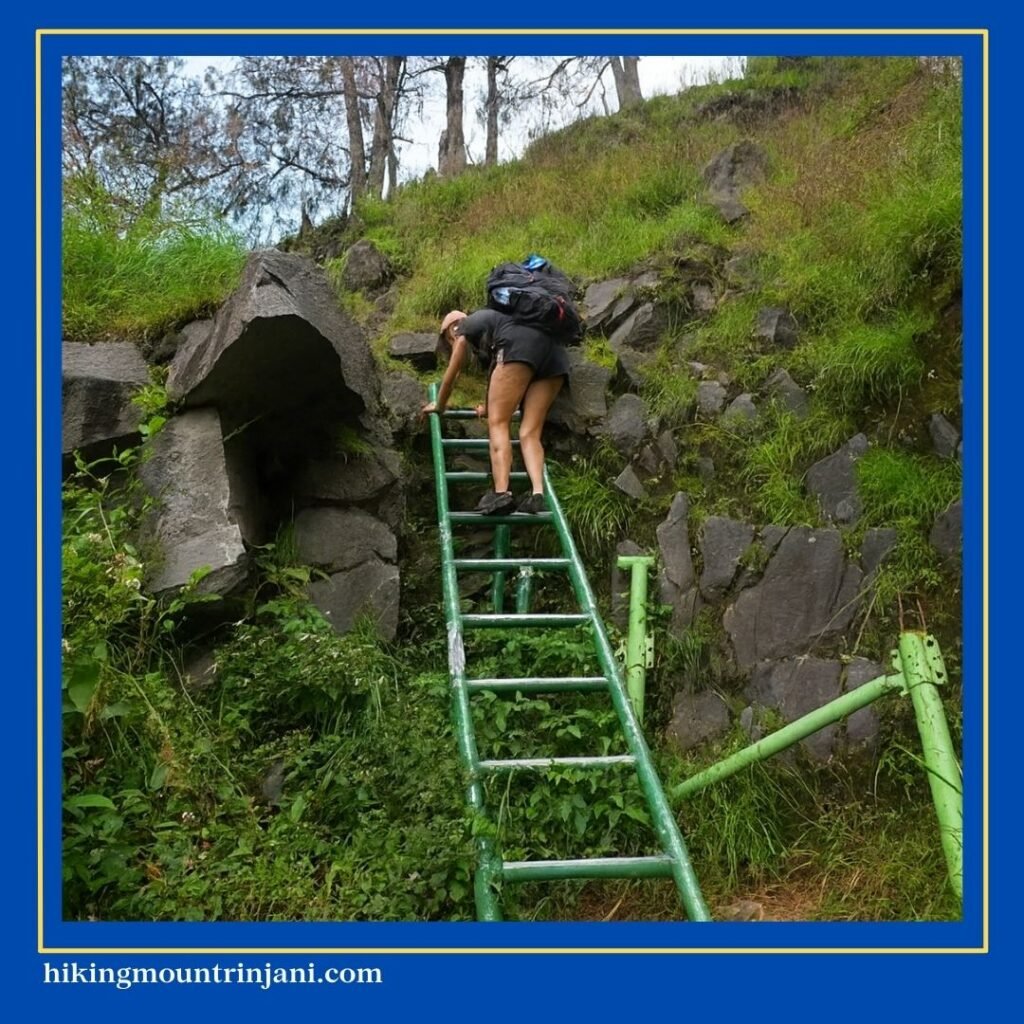
Rinjani offers a completely different character.
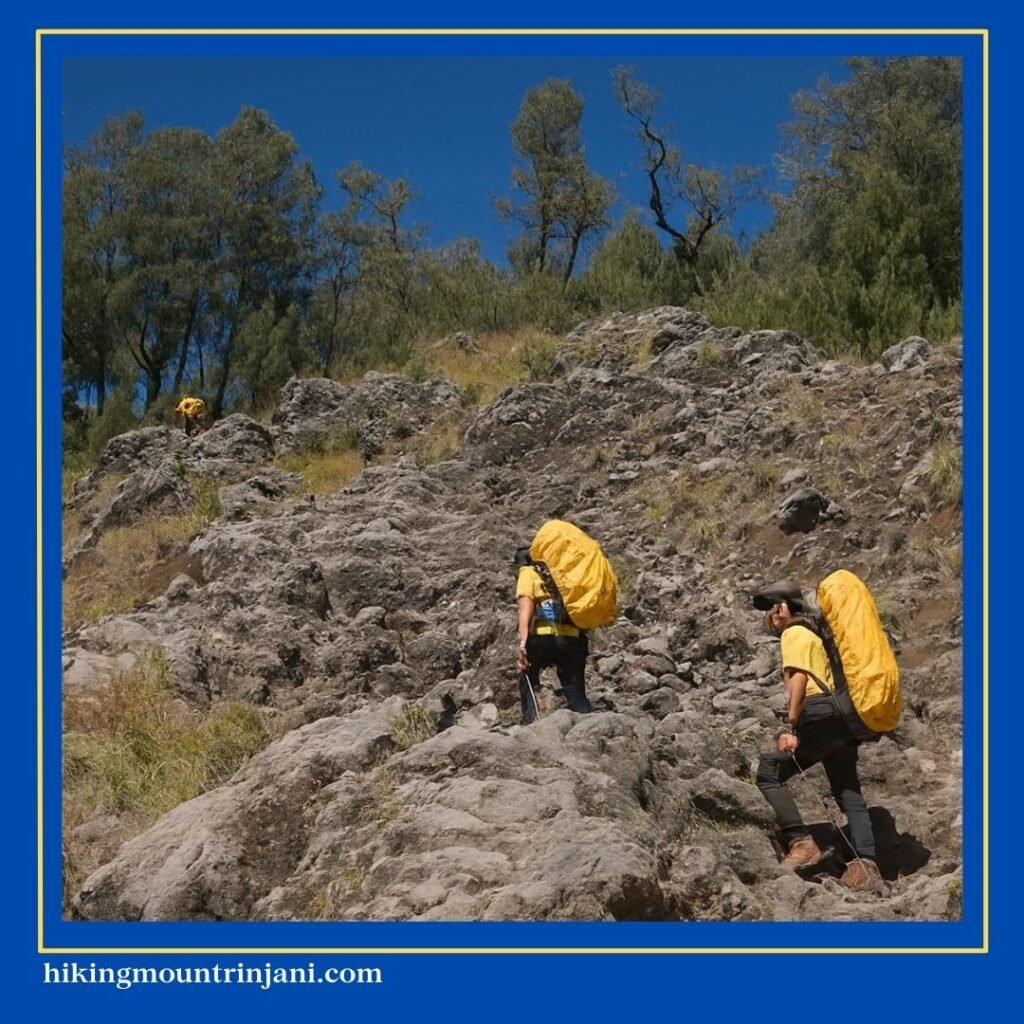
There are man-made stairs on the trekking route, but only a few, placed at specific sections. Their number is very limited. The ascent consists of:
- uneven volcanic rocks
- loose sand and gravel (“dusty scree”)
- narrow ridges
- steep natural slopes
- shifting terrain depending on rainfall and volcanic activity
This means Rinjani feels more natural, raw, and physically demanding. Without stairs to create rhythm, hikers must constantly adjust their pace and footing. The summit push is especially famous for being mentally taxing because every step forward often slides half a step backward.
If you struggle with repetitive stair climbs, Kinabalu may feel harder. But if unstable surfaces exhaust you, Rinjani will absolutely feel tougher.
2. Trail Terrain and Surface Types
Comparing terrains is essential because it determines how much strength, balance, and caution you’ll need.
Kinabalu’s Terrain
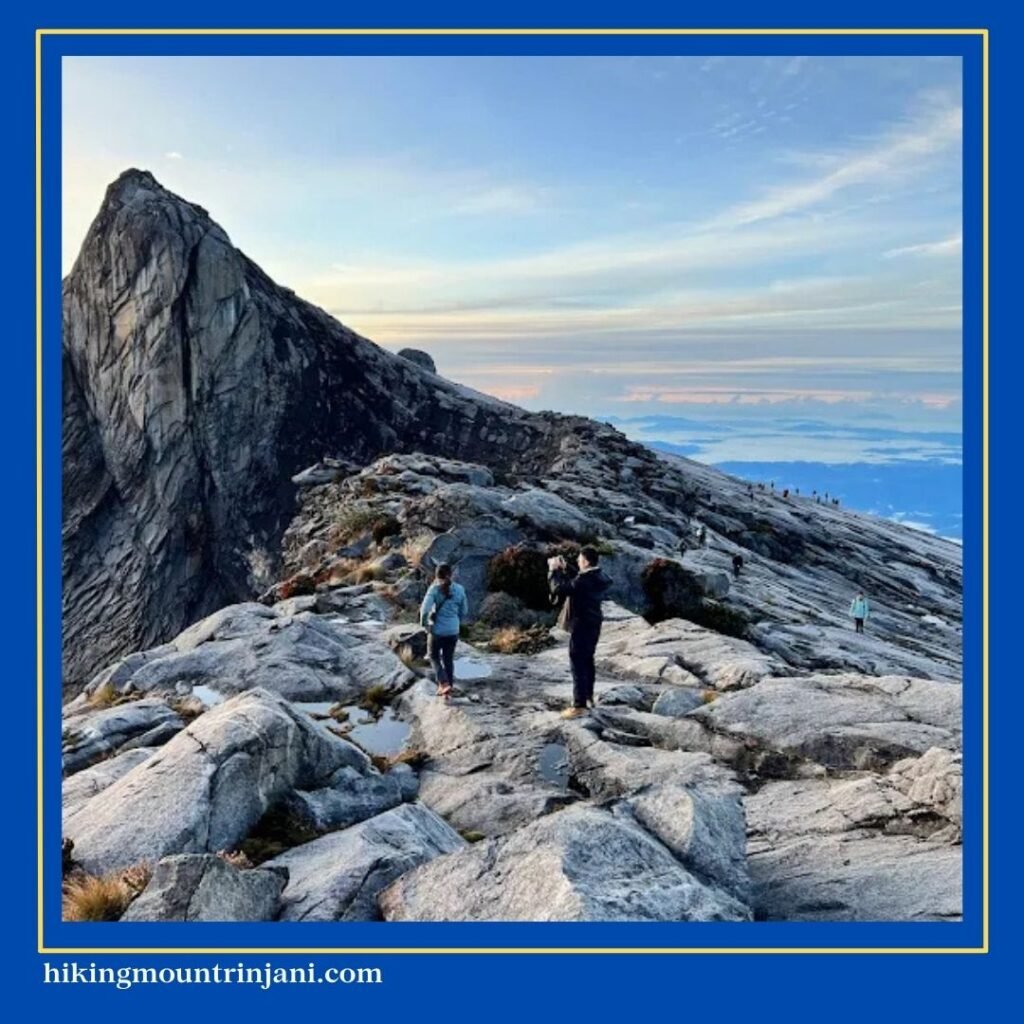
Kinabalu’s surface types are:
- stairs (majority of Day 1)
- flat rock slabs
- granite surfaces at the top
- well-defined, maintained paths
- rope-assisted sections
The advantage is stability. The downside is monotony — many hikers say the stairs can feel endless, especially under humid forest conditions.
Rinjani’s Terrain
Rinjani’s terrain changes drastically depending on altitude and route:
- slippery volcanic sand
- loose scree near the summit
- rocky sections around Senaru and Sembalun
- dusty trails in dry season
- muddy segments in rainy months
- narrow crater rim paths
- long, steep climbs without constructed support
Rinjani’s surface demands more balance, more leg strength, and more endurance. The trail is beautiful but less predictable, and weather can shift terrain conditions quickly.
3. Elevation Gain Level
Elevation gain is one of the strongest indicators of difficulty.
1. Kinabalu’s elevation gain from Timpohon Gate to the summit is roughly:
- 2,300+ meters of gain
- completed over 2 days
- designed with rest stops, huts, and clear checkpoints
- The climb is consistently uphill but broken into manageable segments thanks to shelters.
2. Rinjani, especially the summit route via Sembalun, involves:
- 2,700–3,000 meters of total elevation gain
- depending on itinerary (2D1N, 3D2N, or 4D3N)
- long continuous climbs
- fewer rest structures compared to Kinabalu
- more demanding summit incline
On paper, the difference might look small, but in reality, Rinjani’s elevation gain feels much heavier due to the sandy surface, steep gradient, and longer duration of physical effort. This is one of the biggest reasons many hikers say Rinjani is harder.
4. Duration of the Summit Push
The summit push on both mountains starts in the early hours of the morning, but the duration, and how it feels, is very different.
Mount Rinjani
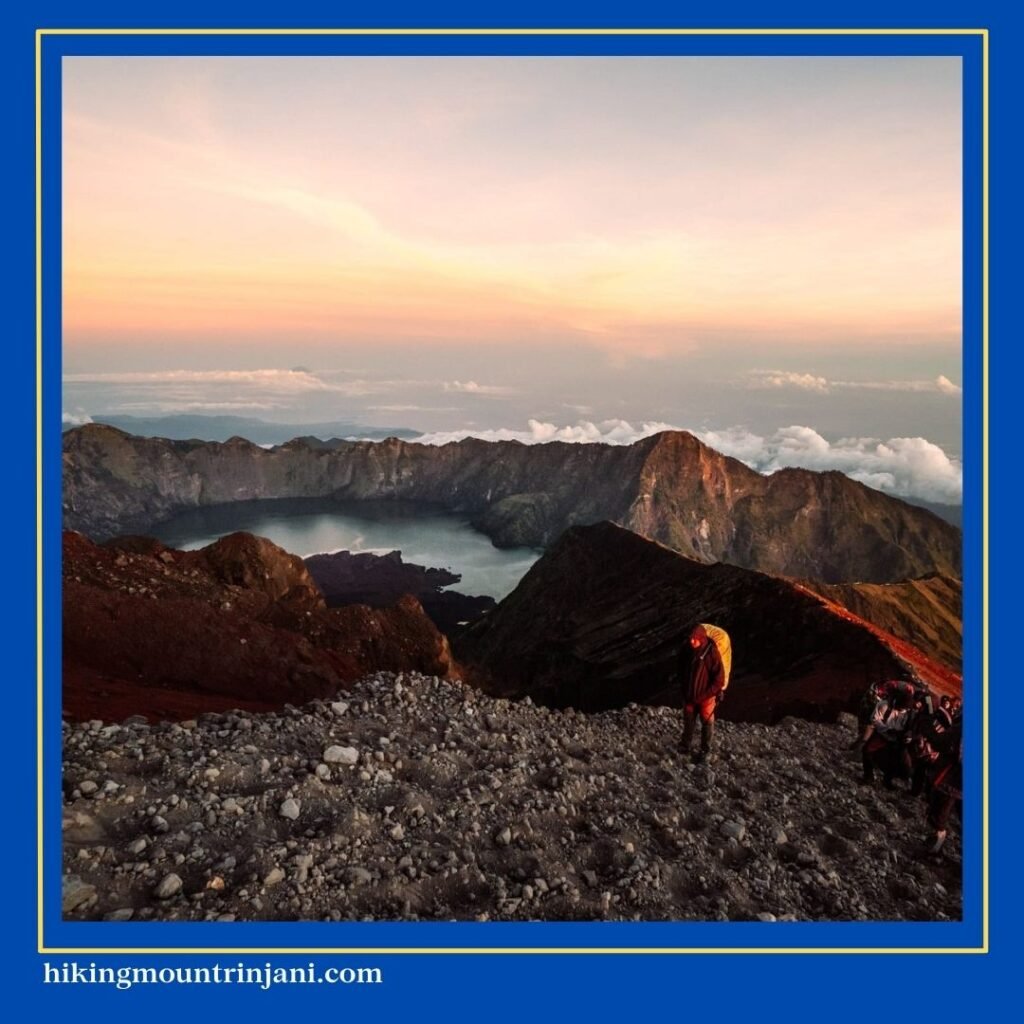
Reaching the summit of Rinjani typically takes 3–4 hours of continuous climbing from the Sembalun crater rim. The terrain is soft volcanic sand, so every step can feel like sliding back half a step. This makes the ascent feel slower, heavier, and more exhausting. Because Rinjani is usually part of a 3–4 day trek, climbers often reach the summit when their legs are already tired from the previous day.
Mount Kinabalu
Kinabalu’s summit push is shorter in duration, taking around 2–4 hours from the mountain hut (Laban Rata area). The trail is steep and involves granite slabs, ropes, and guided sections, but the footing is solid. Since the climb follows a strict 2D1N itinerary, most trekkers start the summit push after a full rest at the hut, making it feel more manageable even though the incline is steep.
In short:
Rinjani’s summit push is longer and more tiring, especially due to the sandy terrain and accumulated fatigue. Kinabalu’s is shorter but steeper, with more technical terrain — yet generally feels more structured thanks to the regulated schedule.
5. Temperature and Weather Conditions
Weather impacts difficulty more than people realize.
1. Kinabalu
- Temperature near the summit: 0–8°C depending on wind
- Forest segment: hot and humid
- Granite plateau: cold, dry, and exposed
- Sudden wind closures are common
- Rain can make stairs slippery but manageable
- Kinabalu has predictable patterns and detailed weather monitoring by park rangers, making it very safe.
2. Rinjani
- Temperature on summit: 5–10°C, occasionally colder
- Wind can be extremely strong
- Dust storms may occur in dry season
- Rain season makes the trail muddy and dangerous
- The crater rim is exposed, and conditions can change in minutes
- Rinjani’s weather is wilder and less regulated, which contributes to the feeling of higher difficulty.
.
Read also: Is Mount Rinjani Worth It for Foreign Hikers? An Honest Review
So, Is Mount Rinjani Harder Than Kinabalu?
For many experienced hikers, Kinabalu feels easy to moderate because of the structured trail and reliable infrastructure. Some even say:
“For seasoned hikers this summit is super easy — I did it in 4.5 hours total.”
Kinabalu’s trail is around 4 km from Laban Rata to the summit, much of it crafted into steps and rope-assisted sections. The climb is still physically challenging, from humid forest to steep granite slopes. But the maintenance, safety measures, and excellent facilities make the journey smooth. The only major complaint from many international hikers is the very high cost, especially for foreign visitors.
Rinjani, however, is a raw volcanic expedition. It demands:
- more strength
- more endurance
- and more mental toughness
- more resilience against shifting sand and steep climbs
If your goal is a natural, rugged mountain adventure, Rinjani delivers a far more intense challenge. But, if you prefer structured trails, safety rails, and predictable terrain, Kinabalu may feel more suitable.
.
Read also: 7 Best Mount Rinjani Summit Views You Rarely Hear About
Challenging, Yet Truly Worth It — Experience Mount Rinjani With Us!
Rinjani has learned a lot from past incidents. Today, the mountain continues improving its safety standards through:
- mandatory insurance
- certified trekking organizers
- better route maintenance
- clearer regulations for summit access
- improved coordination with national park authorities
If you come today, or in the near future, you will experience a safer, more organized, and more enjoyable Rinjani. The mountain remains busy with hikers from all over the world, and all routes operate normally with enhanced supervision.
If you want to feel every incredible moment at the crater rim or the summit, our team at Hiking Mount Rinjani is ready to guide you. Whether you prefer a 2D1N Senaru Crater Rim trek or a 3–4 day summit expedition, we will help you plan your perfect journey.
Visit hikingmountrinjani.com for complete information, or contact us via WhatsApp (linked below) for consultation and booking.
Rinjani awaits — and it is absolutely worth every step.
.